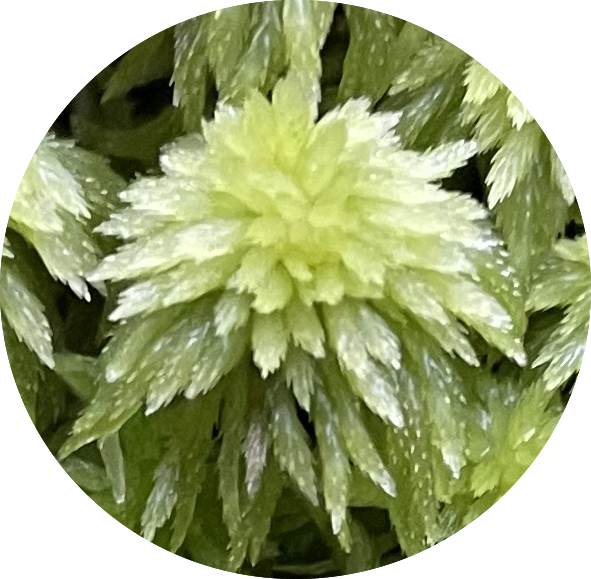
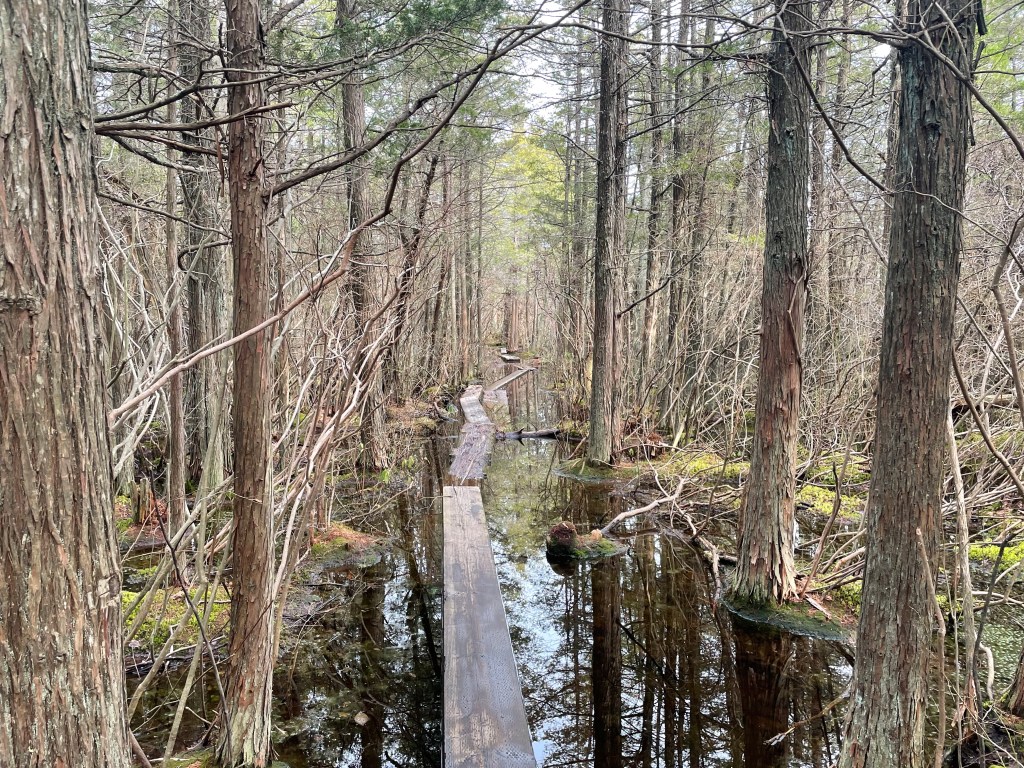
From the other side of the pond, the bog appears as a dense forest of Atlantic white cedar trees rising seemingly from the water itself. Entering the bog, an alien concept of a forest stretches into the distance. Ponkapoag Bog is a watery world of scaly trees emerging from mats of thick Sphagnum that bulge around the tree bases.
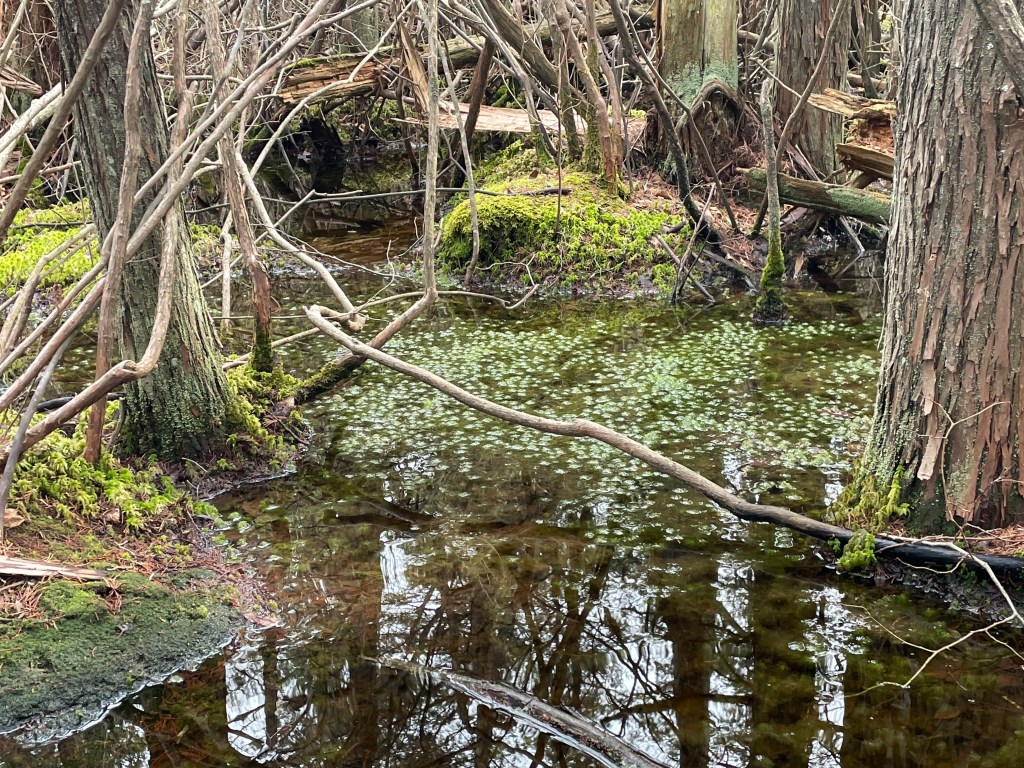
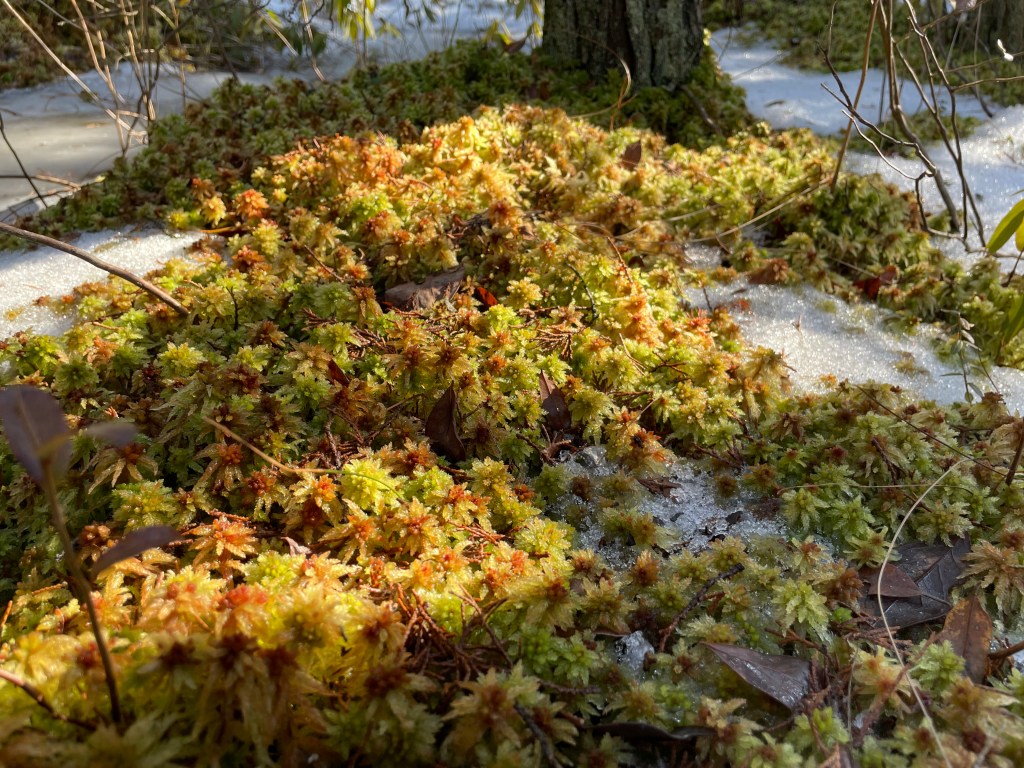
At first, the bog is a dark place where you must tread carefully if you wish to stay dry. Hummocks of green and brown mosses accompany the monoculture of cedars, alternating with patches of open water where more aquatic species of Sphagnum languish at the surface. Soon, the forest abruptly ends and the sun shines down on a meadow of deep red Sphagnum and bog grasses. The bog opens up like this several times as your eyes adjust back and forth between the dark swamp and the wide open sky, until finally the boardwalk and the bog end at the water’s edge.

The peat mosses and cedars have a symbiotic relationship, each highly decay-resistant, and both actively acidifying the soils to keep other plants out. They have been collaboratively building the highly organic soil, expanding their territory deeper into the pond, for thousands of years. A wetland is what is known as an ‘ecotone,’ a transition zone between the aquatic and the terrestrial. Over time, sediment is created by all that is buried and gradually builds more land where previously water pooled. But a wetland is not only a transition in space, but also in time. It is doomed to expand, getting higher and drier until it is no longer wet enough to support the special bog plants, and an upland forest develops on the nutrient-rich soils left behind.

Ponkapoag Bog displays this transition in space and time in full technicolor Sphagnum. The compressed peat is a remnant of the past and the open water beyond the tree line is a promise of the future. The ineffable multidimensionality of nature is especially evident in peat bogs, where young larvae swim among ancient mosses, towering cedars shade microscopic cyanobacteria that pull nitrogen from the air, everything supporting each other while simultaneously striving for their own dominance and survival.
Back on dry land again, a part of you is left behind while something new has taken root. Or perhaps a part of you that was already there has expanded a little like the bog gradually expanding deeper into the dark waters of the pond.
 The Mossy Log
Leave a comment