
Applying GIS Mapping to Analyze the Biogeographic Characteristics of Peatland Ecosystems
Peatlands are globally distributed ecosystems; however, they only occur in specific climates and physical geography around the world. Using GIS mapping, the biogeographic characteristics of blanket bog ecosystem in England were analyzed. These ecosystems are located in regions of high elevation with a climate of high rainfall and low temperatures.
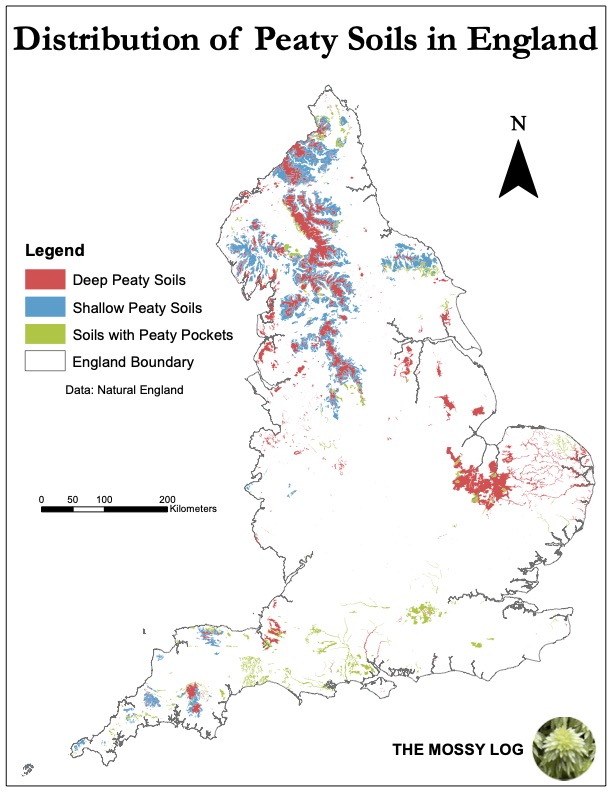
Extensive deep peaty soils indicate peatland ecosystem, a type of wetland fed by rainwater and dominated by Sphagnum mosses. The most extensive area of peaty soils in England is in the north, corresponding to the blanket bog ecosystems that occur in this region.
These soils store an estimated 580 million tonnes of carbon, and support biodiversity only found in these ecosystems.
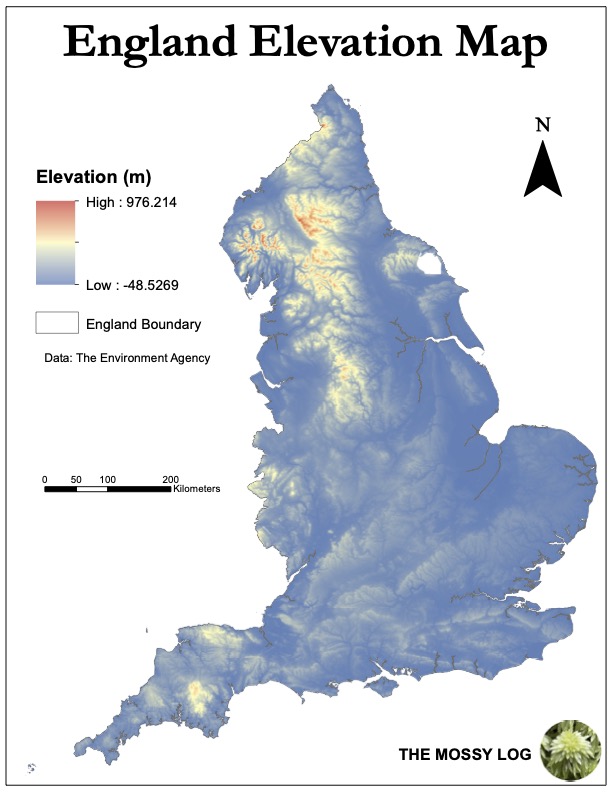
The highest altitudes in England are found in the north of the country. The Pennines are a range of uplands commonly described as the “backbone of England.”
The high elevation of the Pennines blocks precipitation, making the uplands and the northwest of the country much wetter than the northeast.
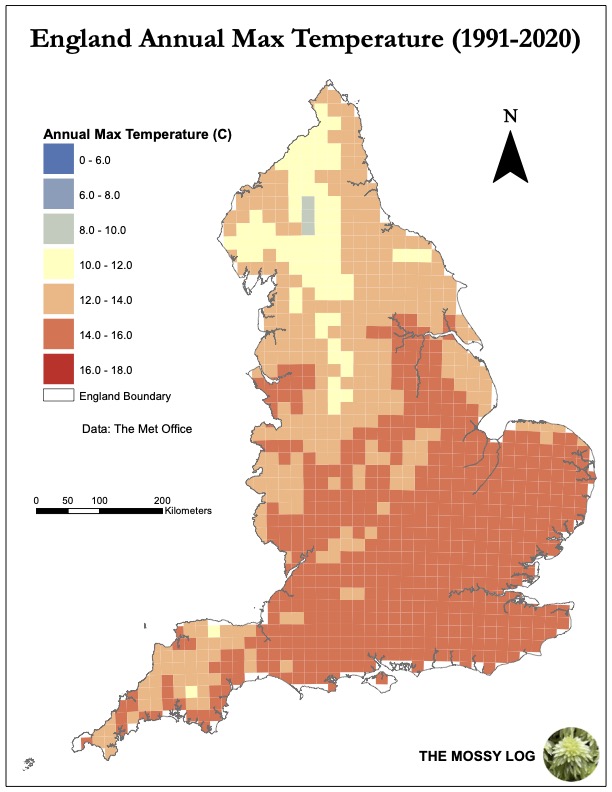
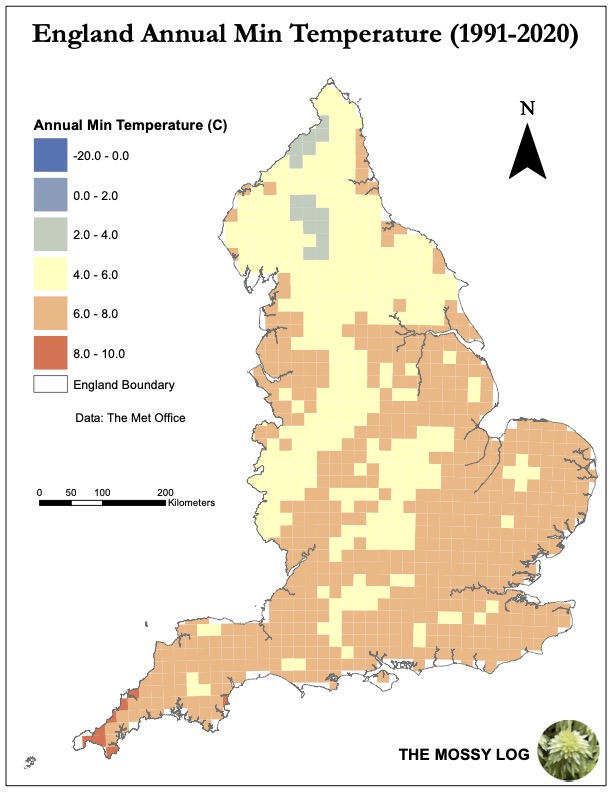
The north of England has the lowest maximum and minimum temperatures in the country, primarily due to the region having the highest altitude, with all of the highest peaks in the country being in this region.
The low temperatures in the north of England also reduce evapotranspiration, allowing groundwater to remain in the ground, supporting the formation of peatland ecosystem.
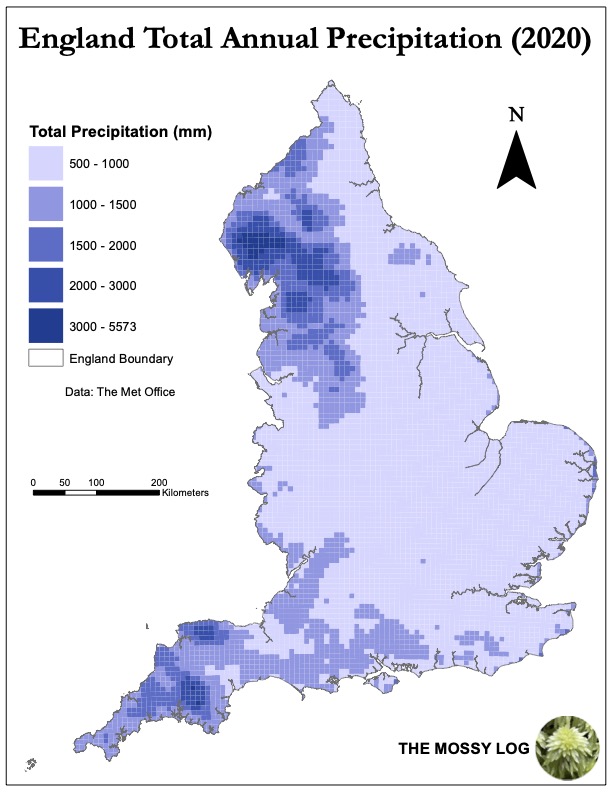
The north of England is the wettest region in the country, primarily due to the high altitude in this region. Moisture moves in from the Atlantic Ocean west of England and condenses as it encounters the high altitude of the north of England, causing the highest precipitation in the northwest of the country.
Peat bog ecosystems are ombrotrophic, meaning they are fed by precipitation. This is why the most extensive peatlands are found in the northwest of England, where precipitation can exceed 3000mm annually.
 The Mossy Log
Leave a comment